Occupational Health GP for Blackheath & Brackenfell Employers
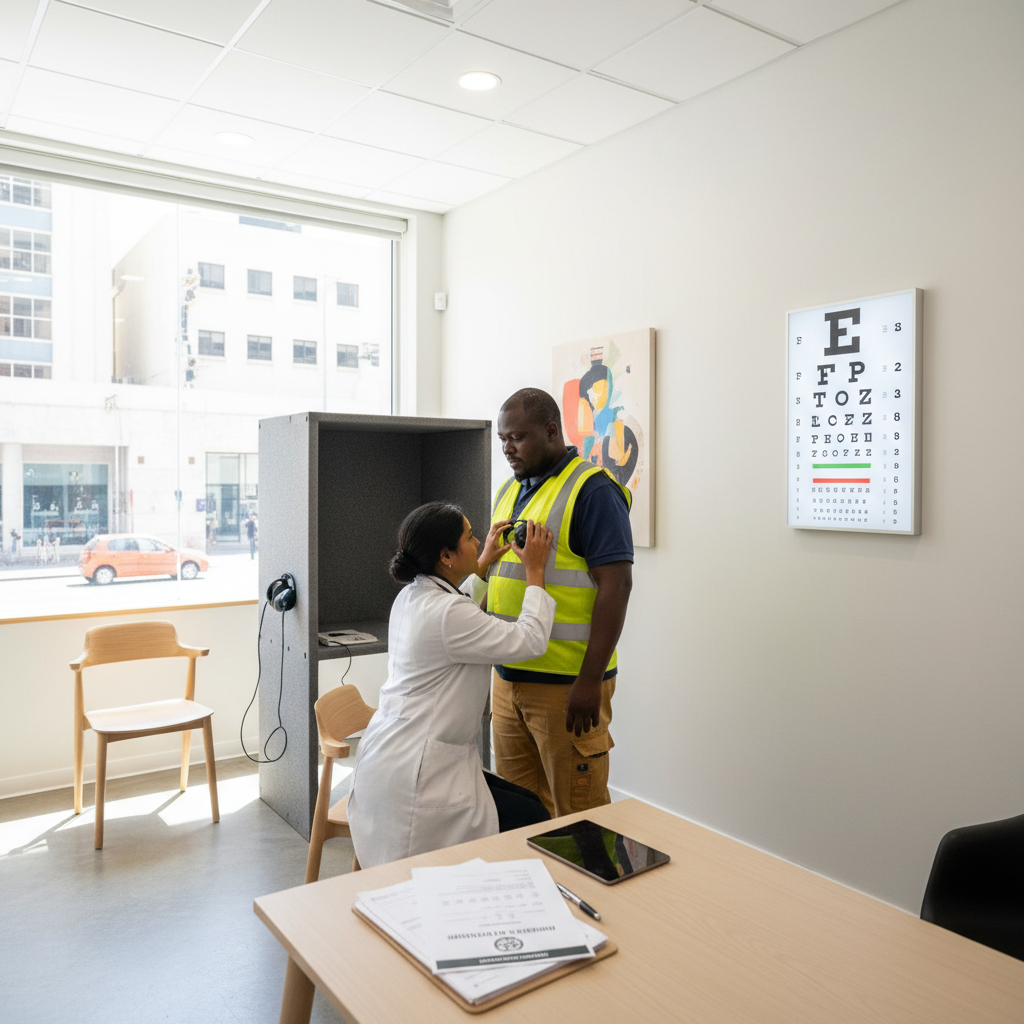

Every April, as South Africa’s new financial year begins, HR managers and operations directors in Blackheath Industrial Park quietly ask the same question: are we actually compliant with the OHS Act? Research published by the Department of Employment and Labour consistently shows that more than 60% of small-to-medium businesses in industrial areas are missing at least one mandatory health surveillance requirement. Many do not realise it until an inspector arrives.
TL;DR: The Occupational Health and Safety Act (OHS Act) 85 of 1993 requires employers to protect their workers from workplace health hazards. For most Blackheath Industrial employers this means pre-employment medicals, periodic health surveillance, exit medicals, and documented fitness assessments. Kuilsriver Doctors is 8 minutes from Blackheath Industrial Park on Carinus Street, Kuilsriver. We handle the full range of OHS Act medical assessments for manufacturing, logistics, food processing, and construction employers. Call 021 903 6830.
What Does the OHS Act Actually Require From Employers?
Section 8 of the Occupational Health and Safety Act (OHS Act) 85 of 1993 places a general duty on every employer to provide a workplace that is safe and without risk to health, as far as is reasonably practicable. This is not a vague aspiration. It is a legal obligation with criminal penalties attached, including fines and imprisonment for company directors. Most Blackheath employers already know about OHS Act Section 8 in general terms. What many miss is the specific medical compliance component buried in Regulation 7.1 and the related General Safety Regulations.
Regulation 7.1 under the OHS Act requires that employers appoint a competent medical practitioner to conduct occupational health assessments where workers are exposed to identified hazards. In Blackheath’s manufacturing, logistics, food processing, and construction sectors, identified hazards are the rule, not the exception. Noise above 85 dB(A), dust, chemicals, shift work, and physically demanding tasks all trigger the requirement for structured health surveillance (werksgeneeskunde) programmes.
Section 14 of the OHS Act also places duties on employees themselves, but the employer carries the primary liability. If a worker is harmed by a workplace health hazard and the employer cannot show documented compliance, the legal and financial exposure is significant.
How Much Can Non-Compliance Actually Cost?
The direct fines under the OHS Act reach up to R100,000 per contravention, and directors of companies can face criminal prosecution under Section 37 for wilful or negligent non-compliance. The Department of Employment and Labour has increased enforcement activity across Western Cape industrial areas over the past three years, including unannounced inspections of Blackheath Industrial Park operations.
Beyond fines, the real cost of non-compliance lands in your COIDA record. The Compensation for Occupational Injuries and Diseases Act (COIDA) governs compensation for workers injured or made ill at work. When a worker has an IOD (Injury on Duty) and the employer cannot produce baseline health records or documented fitness assessments, disputes become expensive. Workers commonly say “Ek het ‘n IOD gehad” (I had an injury on duty) as the start of a claim process that can take months and cost thousands in lost productivity, legal fees, and COIDA levies.
A company that conducts proper pre-employment medicals and periodic health surveillance has documented proof that a worker was fit at hire and that any deterioration in health was tracked. That documentation is your protection under COIDA.
What Can a GP Do vs What Needs a Specialist Occupational Health Practitioner?
Most Blackheath employers do not need a full-time occupational health nurse or specialist on-site. A well-equipped GP with occupational health experience can legally and competently handle the majority of OHS Act medical requirements for small-to-medium businesses. Here is where the line sits.
| Assessment Type | GP at Kuilsriver Doctors | Specialist OH Practitioner |
|---|---|---|
| Pre-employment medical | Yes | Yes |
| Periodic health surveillance (vision, hearing, lung, BP, blood sugar) | Yes | Yes |
| Exit medical / fitness certificate | Yes | Yes |
| Fitness-to-return after IOD | Yes | Yes |
| Noise-induced hearing loss formal audiogram | Basic screening yes; formal audiologist for diagnostic | Referral for formal |
| Occupational disease diagnosis (e.g., silicosis, asbestosis) | Initial assessment; specialist referral as needed | Full assessment |
| Hazard identification and risk assessment | No | Yes |
| OHSA compliance audit | No | Yes |
For most manufacturing, logistics, food processing, and construction employers in the Blackheath area, a GP with occupational health experience covers 80 to 90% of what the OHS Act requires from a medical perspective. Kuilsriver Doctors has been providing occupational health assessments with over 20 years serving Kuilsriver and the Northern Suburbs.
What Are the Four Core Occupational Health Assessments?
The National Institute for Occupational Health (NIOH) identifies four structured assessment types that form the backbone of any OHS Act-compliant health surveillance programme. Every Blackheath employer with workers in hazardous environments should have all four in place.
Pre-Employment Medical (Medies voor indiensneming)
A pre-employment medical establishes a health baseline before a worker starts. It confirms the worker is fit for the specific demands and hazards of the role. For a detailed breakdown of exactly what tests are included and what to expect, see our complete guide to pre-employment medicals in Cape Town. This is the starting point of your OHS compliance record for every new employee.
Periodic Health Surveillance
Periodic surveillance means the same worker is re-examined at regular intervals, typically annually for hazardous roles, to check whether their health is changing in ways linked to workplace exposures. A Blackheath factory worker exposed to noise should have an audiogram baseline at hire and annual hearing checks. If hearing deteriorates, the employer knows early and can take action on protective equipment, exposure limits, or reassignment. Without periodic surveillance, you only discover the damage when a COIDA claim arrives.
Fitness-to-Return Assessment
After any significant illness, injury, or IOD, a formal fitness-to-return assessment determines whether the worker can safely return to their previous role or needs modified duties. This protects the worker from re-injury and protects the employer from liability if a worker returns to a role they are not yet medically cleared for. This assessment is separate from a sick note and carries more weight in IOD dispute resolution.
Exit Medical
An exit medical, conducted when a worker leaves employment, captures their health status at the end of the employment relationship. It documents any occupational disease or health change that developed during employment. Under COIDA, occupational diseases can be claimed for years after exposure if the worker can prove the connection. An exit medical gives both parties a clear record that closes that window fairly.
What Does Each Industry in Blackheath Specifically Need?
The OHS Act’s General Safety Regulations and the relevant industry-specific regulations dictate different requirements based on the hazards present. Here is a practical summary for the main industries operating in and around Blackheath Industrial Park.
Manufacturing and Light Industry
Manufacturing environments typically involve noise, mechanical hazards, and chemical exposure. The Noise-Induced Hearing Loss Regulations under the OHS Act require employers to conduct noise assessments where workers are regularly exposed to noise above 85 dB(A). Once that threshold is crossed, a hearing conservation programme is mandatory, which includes baseline and annual audiometry for all exposed workers. Pre-employment hearing tests (oudiometrie) and lung function tests (spirometrie) are minimum requirements for most manufacturing roles.
Food Processing and Food Handling
Food handlers require specific health clearances that go beyond the standard OHS Act framework. The Foodstuffs, Cosmetics and Disinfectants Act 54 of 1972 and regulations under the Department of Health require that food handlers are free from communicable diseases that could contaminate food. In practice this means stool cultures to rule out typhoid and other enteric infections, TB screening, and a certificate of fitness for food handling. Food processing employers in Blackheath must renew these certificates annually.
Construction
Construction sites near Blackheath fall under both the OHS Act and the Construction Regulations 2014, which impose specific medical requirements on workers at height, in confined spaces, and in dusty environments. Lung function baseline testing is required for workers exposed to silica dust. Workers doing work at height need a fitness assessment that specifically covers balance, vision, and cardiovascular status. Physical and musculoskeletal assessments are standard for any role involving heavy lifting or awkward postures.
Logistics and Warehousing
Logistics operations have a high rate of IOD claims nationally, according to the Compensation Fund annual report. Manual handling injuries, forklift incidents, and slip-and-fall accidents dominate the claim profile. Pre-employment medicals for logistics workers should always include musculoskeletal assessment, vision, and blood pressure. Forklift operators and other machine operators may also need a PrDP medical if they drive commercial vehicles on public roads. Our health screening services can be structured to address the specific hazard profile of your warehouse operation.
How Does COIDA Work When a Worker Is Injured?
COIDA registration is compulsory for all employers in South Africa. Every employer must register with the Compensation Fund and pay annual levies based on their payroll and industry risk class. When a worker has an IOD (Injury on Duty), the process follows a specific sequence.
The employer must report the injury to the Compensation Fund within seven days using a W.Cl.2 form (Employer’s Report of Accident). The treating doctor must complete a W.Cl.4 (First Medical Report) and, where relevant, a W.Cl.22 (Medical Report on Resumption of Work). Kuilsriver Doctors completes these COIDA forms for workers and employers in the Kuilsriver and Blackheath area. We understand the paperwork and we know what the Compensation Fund requires to process a claim without delays.
If your business has workers who regularly say “Ek het ‘n IOD gehad” (I had an injury on duty), a proper baseline health record and a documented health surveillance programme means every claim is processed against a clear health record, not a blank page.
Does Your April Compliance Review Show These Gaps?
The start of the new financial year on 1 April is the most common time for Blackheath employers to run compliance reviews. It is when new employment contracts are signed, when shift structures change, and when health surveillance programmes are renewed. Based on what we see at Kuilsriver Doctors every April, here are the gaps that appear most often.
The most common OHS Act health compliance gaps in Blackheath businesses:
- No baseline pre-employment medicals on file for workers hired more than 12 months ago
- Periodic health surveillance overdue (last done more than 14 months ago)
- No exit medicals conducted when workers leave
- Noise-exposed workers without documented hearing tests
- Food handlers whose certificates expired and were not renewed
- No fitness-to-return assessment for workers coming back from IOD or extended sick leave
- COIDA forms (W.Cl.2, W.Cl.4) not filed within the required 7-day window
If your April audit reveals any of these, the path to compliance is straightforward. Kuilsriver Doctors can conduct all the required medical assessments and issue the documentation your occupational health file needs.
Why Blackheath Employers Choose Kuilsriver Doctors
Kuilsriver Doctors is at Shop 9, De Kuilen Shopping Centre, Carinus Street, Kuilsriver, which is 8 minutes from Blackheath Industrial Park by road. This proximity matters for employers who need to send workers for assessments without losing half a working day.
We have been serving Blackheath employers and Northern Suburbs workers for over 20 years. We carry 403 RecoComed recommendations, more than any practice in the Kuilsriver area. Our occupational health service covers the full range of OHS Act-required assessments, all conducted on-site at our Kuilsriver practice.
What Kuilsriver Doctors offers Blackheath employers:
- Pre-employment medicals with same-day fitness certificates
- Annual periodic health surveillance programmes by arrangement
- Exit medicals on request
- Fitness-to-return assessments after IOD or extended sick leave
- COIDA form completion (W.Cl.2, W.Cl.4, W.Cl.22)
- Baseline and periodic hearing tests (oudiometrie) and lung function tests (spirometrie)
- Food handler certificates (stool culture, TB screening, fitness certificate)
- Corporate accounts for Blackheath employers with ongoing compliance needs
Practice details:
- Address: Shop 9, De Kuilen Shopping Centre, Carinus Street, Kuilsriver 7580
- Phone: 021 903 6830
- Hours: Monday to Friday 8:00 to 17:00, Saturday 8:00 to 12:00
For a complete overview of all medical certificates and assessments available at our practice, see our guide to medical certificates in Kuilsriver.
Need OHS compliance support? Call 021 903 6830.
Frequently Asked Questions
Is a GP legally allowed to conduct OHS Act medical assessments?
Yes. The OHS Act and Regulation 7.1 refer to “a competent medical practitioner,” which in South Africa means a registered medical doctor. A GP with occupational health experience is fully authorised to conduct pre-employment medicals, periodic health surveillance, fitness-to-return assessments, and exit medicals. For complex occupational disease diagnosis or formal occupational health audits, a specialist may be required, but most routine OHS compliance medical work falls comfortably within a GP’s scope.
How often do workers need periodic health surveillance under the OHS Act?
The OHS Act does not specify a single universal interval. Industry-specific regulations set the frequency. For noise-exposed workers under the Noise-Induced Hearing Loss Regulations, annual audiometry is required once the baseline is established. For most hazardous role categories, an annual medical is standard practice and what inspectors from the Department of Employment and Labour expect to see documented.
What happens during a Department of Labour OHS inspection?
An inspector from the Department of Employment and Labour can arrive unannounced and request documentation on the spot. They will typically ask for your OHS hazard identification register, your appointed safety officer or representative, your accident/incident register, and health surveillance records for workers in hazardous roles. Missing records are a contravention of the OHS Act. Having a current, documented health surveillance programme with medical reports on file is the fastest way to pass an inspection.
What is the difference between COIDA registration and OHS Act compliance?
They are separate but related legal obligations. COIDA registration means you are enrolled with the Compensation Fund and paying levies, which gives your workers access to compensation if they are injured or made ill at work. OHS Act compliance means you have taken active steps to prevent those injuries and illnesses through documented safety measures, including health surveillance. Being registered for COIDA does not automatically mean you are OHS Act compliant, and vice versa.
Can Kuilsriver Doctors set up an annual health surveillance programme for our company?
Yes. Employers in Blackheath and the Northern Suburbs can arrange a corporate account with us. This means we schedule your workforce for annual assessments in batches, bill the company directly, and maintain records you can access when needed for compliance audits. Call 021 903 6830 to discuss your workforce size and the specific hazards present in your workplace, and we will put together a programme that fits.
Does an IOD claim automatically mean the employer was non-compliant?
No. An IOD (Injury on Duty) is a workplace incident, not automatic proof that the employer was negligent. COIDA exists precisely because injuries happen even in well-run workplaces. What makes the difference is documentation. An employer with baseline health records, regular health surveillance, and properly filed COIDA forms (W.Cl.2 and W.Cl.4) is in a far stronger position when a claim is disputed. Non-compliance is typically found when records are missing or when the employer cannot show they assessed the health risk in advance.
Kuilsriver Doctors serves Blackheath Industrial Park employers and Northern Suburbs workers from Shop 9, De Kuilen Shopping Centre, Carinus Street, Kuilsriver 7580. For OHS Act health compliance support, call 021 903 6830. Monday to Friday 8:00 to 17:00, Saturday 8:00 to 12:00.
Concerned about your health? Book a consultation with our experienced doctors.